


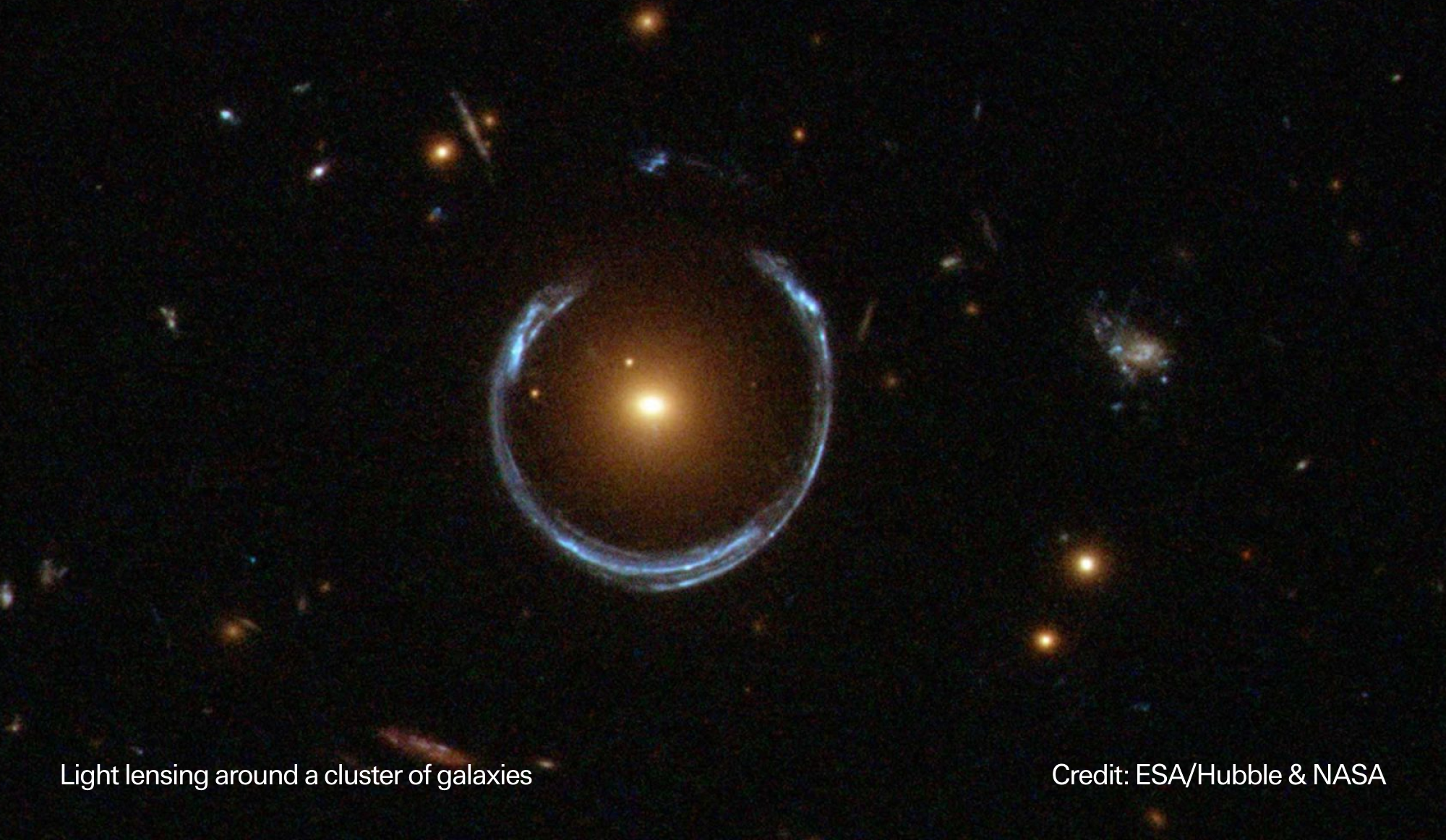
Let's start with the name. We exist to align the world’s biggest, most complex processes. That’s exactly what made “Lensing” such a great one: It's a physics term for when massive objects align so precisely that the light around them bends and is drawn into focus—revealing what was always there but previously out of reach.
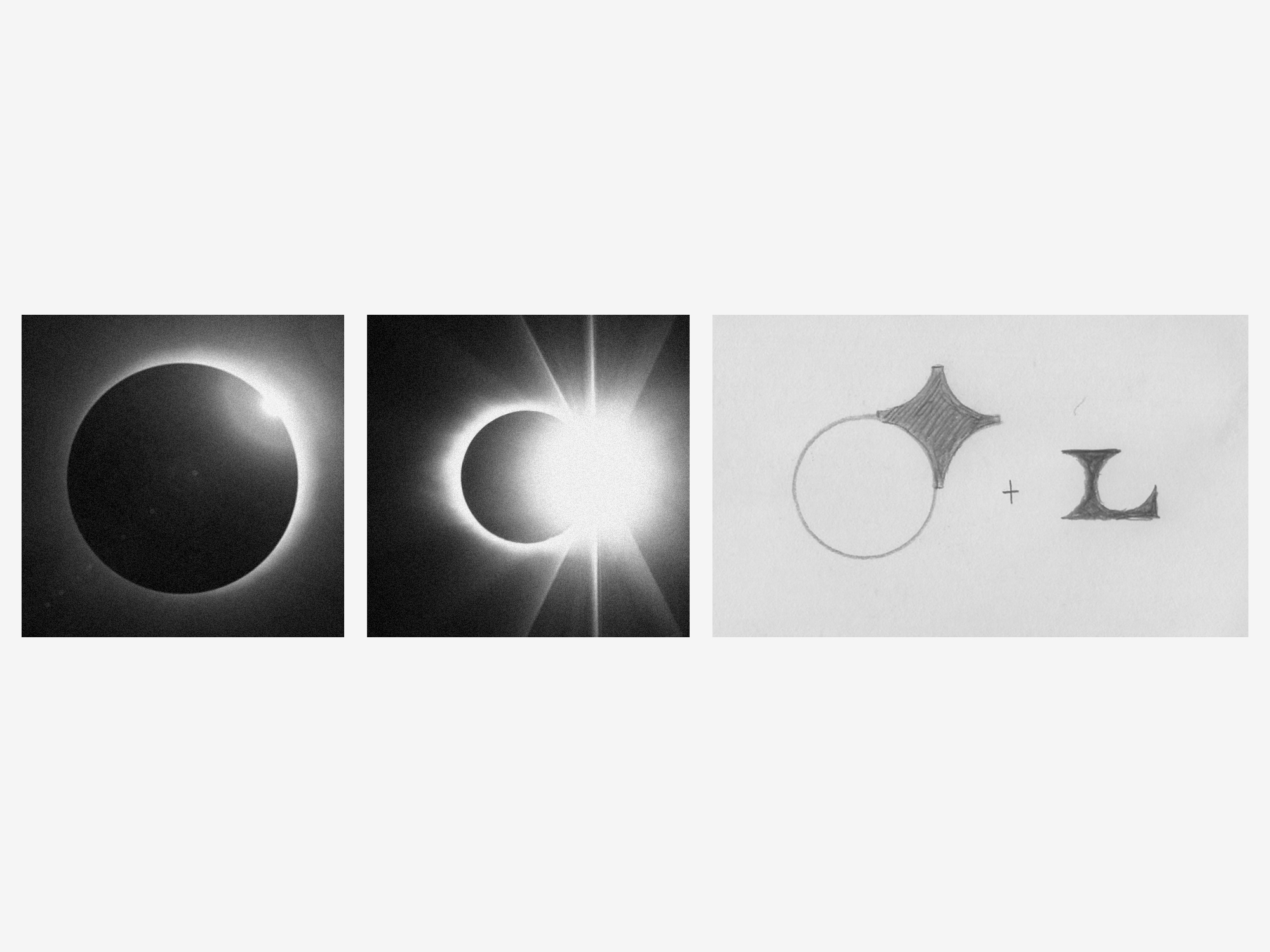
We knew the visual story would have to be able to encapsulate that sense of scale, and give viewers the profound sense of control that finance teams feel when their entire back office just snaps into place. It needed to conjure the relief they feel when they’re no longer fighting their own systems just to get things done.
This got us sketching.
Add to that our customers are not like other ERP startup customers: “99% of the ERP market exists outside of Silicon Valley,” says our Co-Founder and Co-CEO, Sandeep Chopra. We at Lensing are focused on the whole spectrum of companies, tech to manufacturing, forestry to logistics, not just software startups. We were also global from day one, co-headquartered in both Heidelberg, Germany and Mountain View, California.
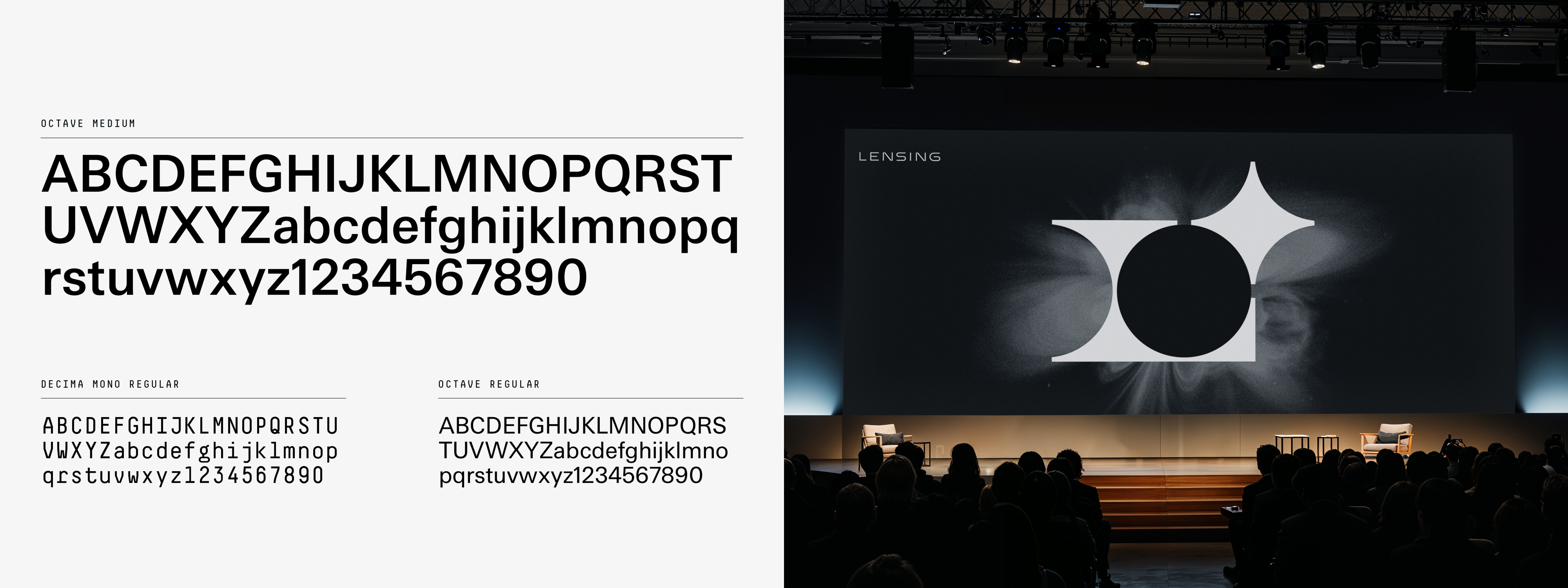
Which led us to the logo. The harsh lines suggest that a computer numerical control (CNC) machine-milled the Lensing “L” out of a thick piece of steel. Those shapes come from a grid system that we can also use to punch out a whole dialect of shapes.
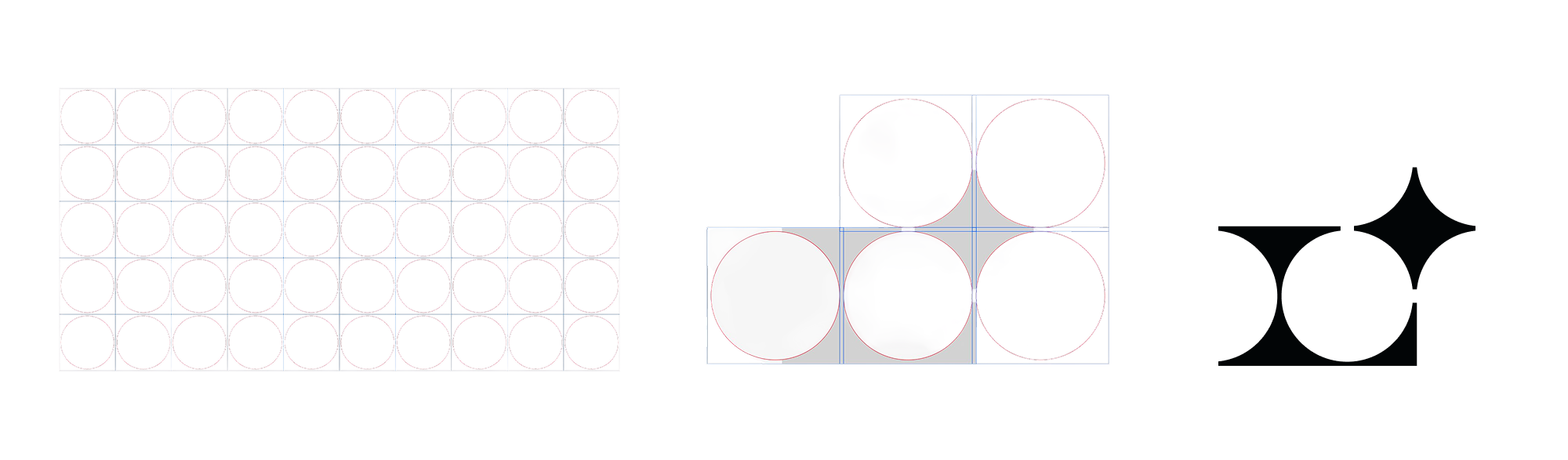
This is where the logo really starts to convey the product: Our founders spent an uncommonly long five years in stealth, free from market pressures, so they could build an entire ERP, from record to report to revenue automation to an inventory suite, all together in one. That’s never been done before. And, our founders had the humility to still know they could never build every single conceivable customization for customers, so they built an AI feature studio so companies could “complete” their ERP using the ERP. You get a deterministic core with a complete foundation, with an AI stack on top to complete whatever’s needed next.
Thus, you can see why we chose an AI “star” to complete the “L.” Together, they form … a lens.
Then let’s zoom out, oh, about some hundreds of billions or so light years. Lensing isn’t just planets aligning. It is such a massive event, it involves an entire cluster of millions of universes that stretch the fabric of spacetime like a bowling ball on a beach blanket. That incredible weight pulls all the light toward it. Viewed from where we are, it looks like a halo around that cluster of galaxies.
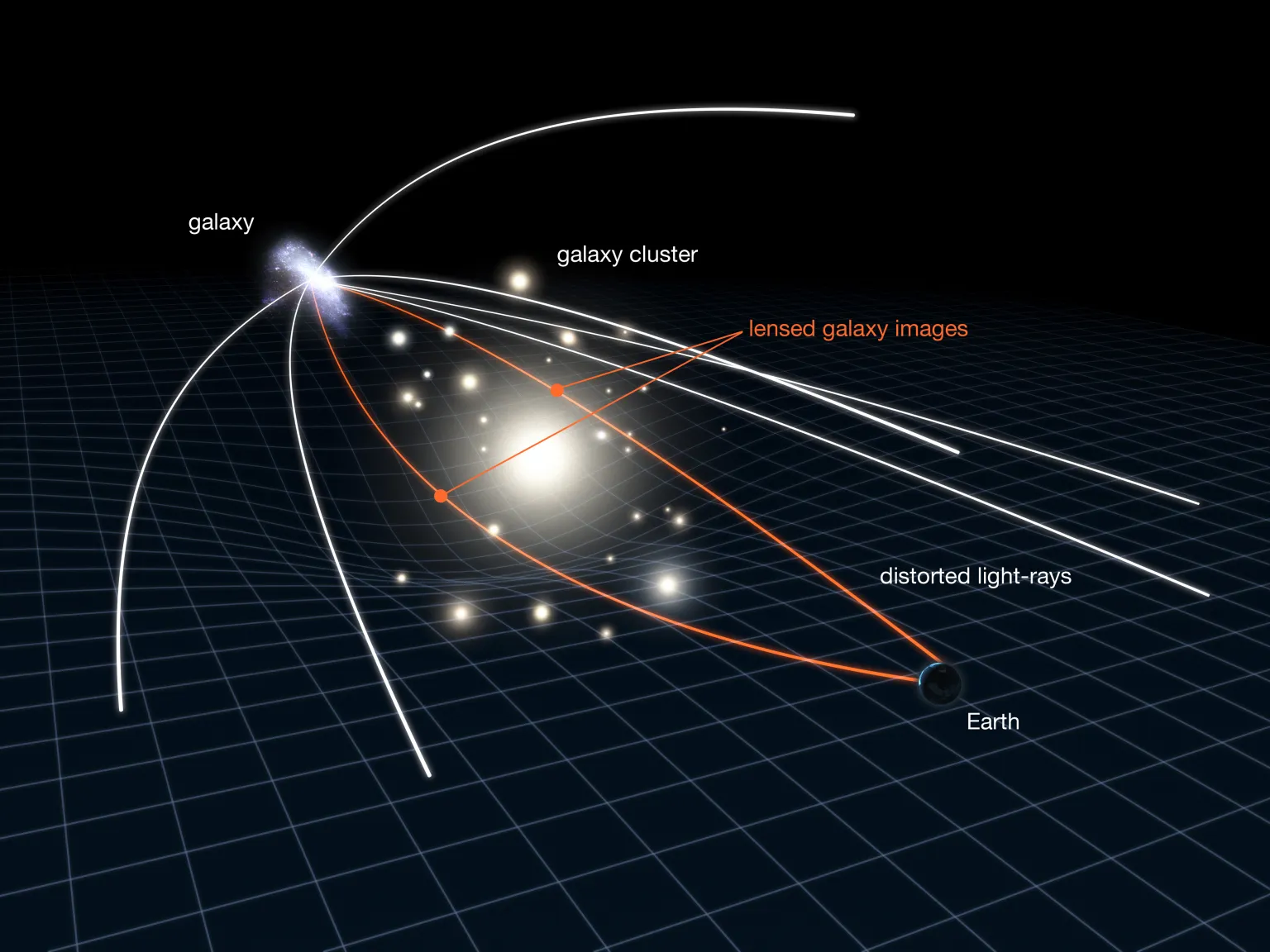
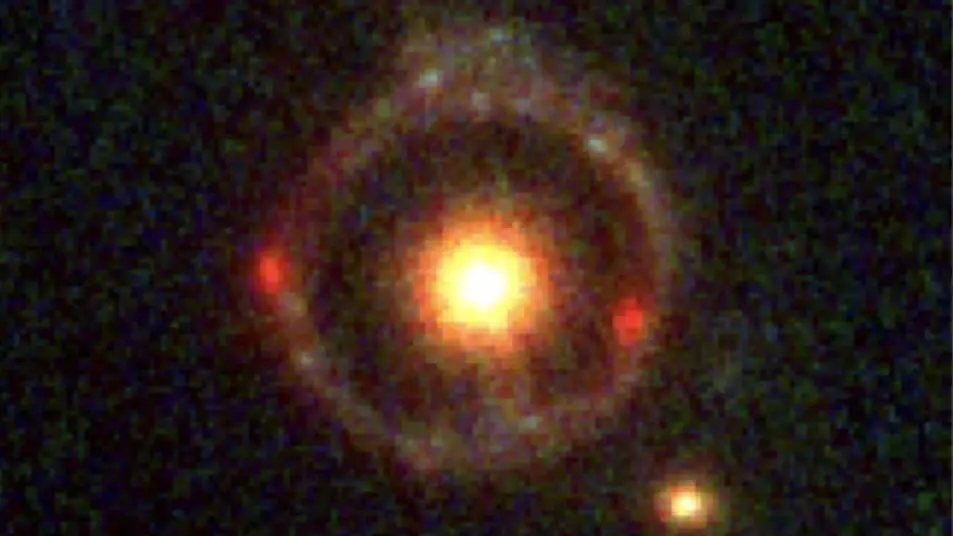
In that ring, astronomers can zoom in to view objects behind those galaxies, far more distant. “It’s really remarkable, lensing is the only way we know what’s out there in the universe,” says Thomas Beatty, Professor of Astronomy at the University of Wisconsin. And they are huge. A single lensing can be billions of light years across; and there are billions of lensing events happening in the sky. It’s like the universe is filled with naturally occurring telescopes, drawing what’s much harder to see into clear view.
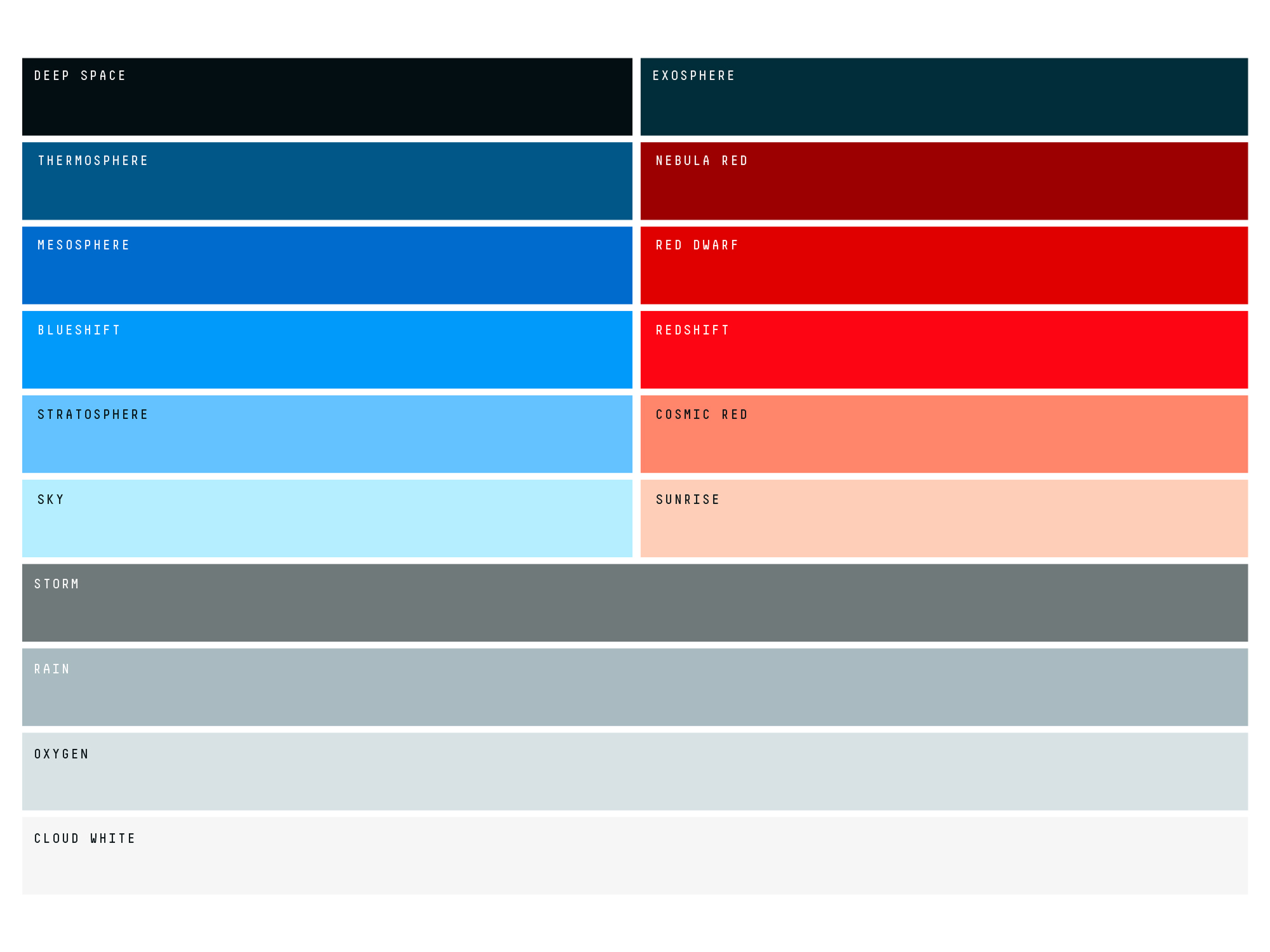
And yet, that’s a lot of empty blackness. So we took all that light moving rapidly away (redshift) and rapidly toward us (blueshift), plus a nice gradient made of layers from the Earth's atmosphere.
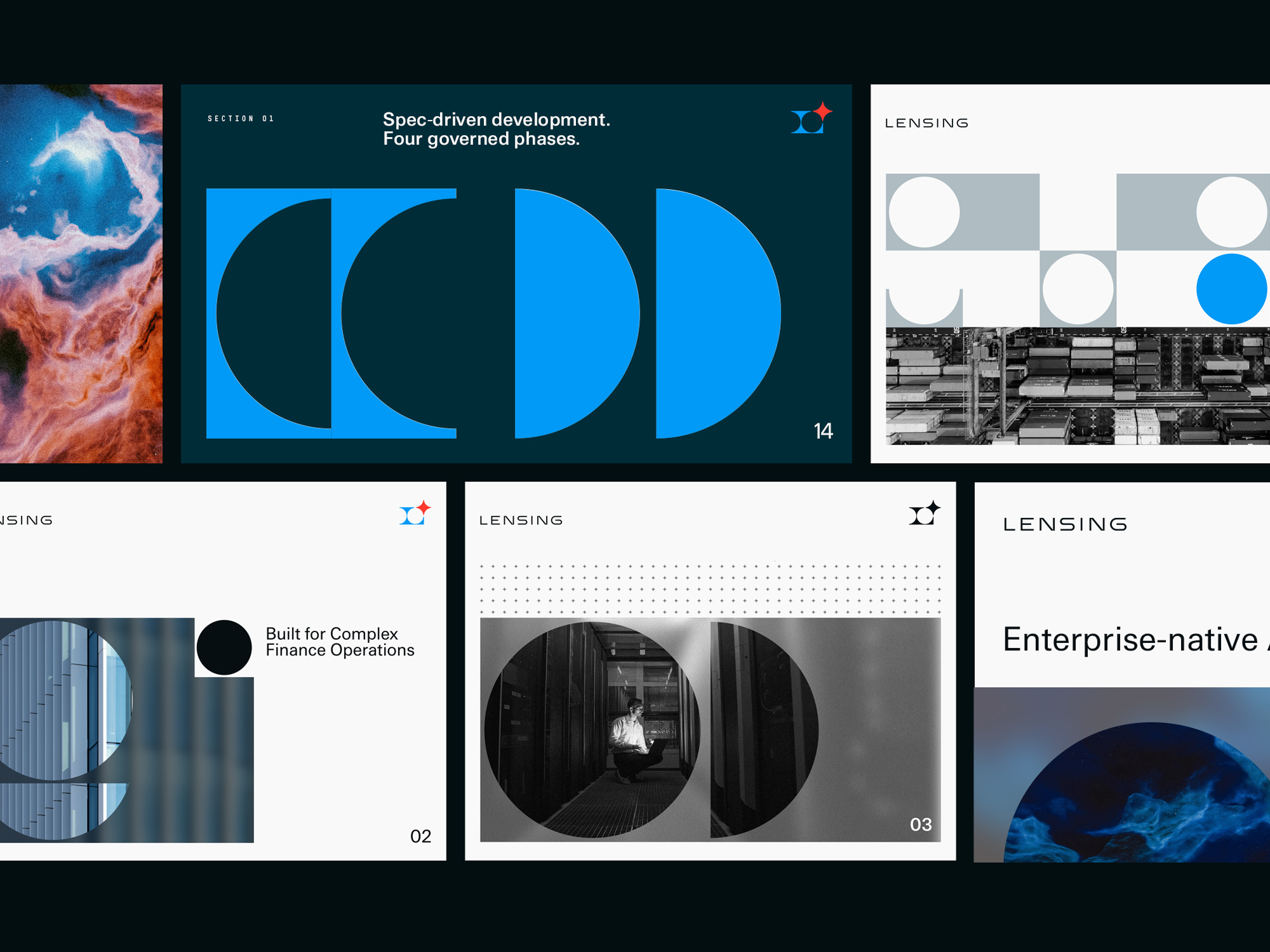
When we combine the machine-milled objects with iconic photos of nebulae like Orion and Eagle, we get lockups that feel engineered, not ornamented—brutalist, sound, and functional, yet sensitive to the awe of the natural universe and the physics that govern our work. With a primary font that’s straight and unadorned—focused on the work, just like us. The secondary font is reminiscent of typewriters, or early digital interfaces, which root us in primary research and a deep respect for how far we’ve all advanced as an industry.
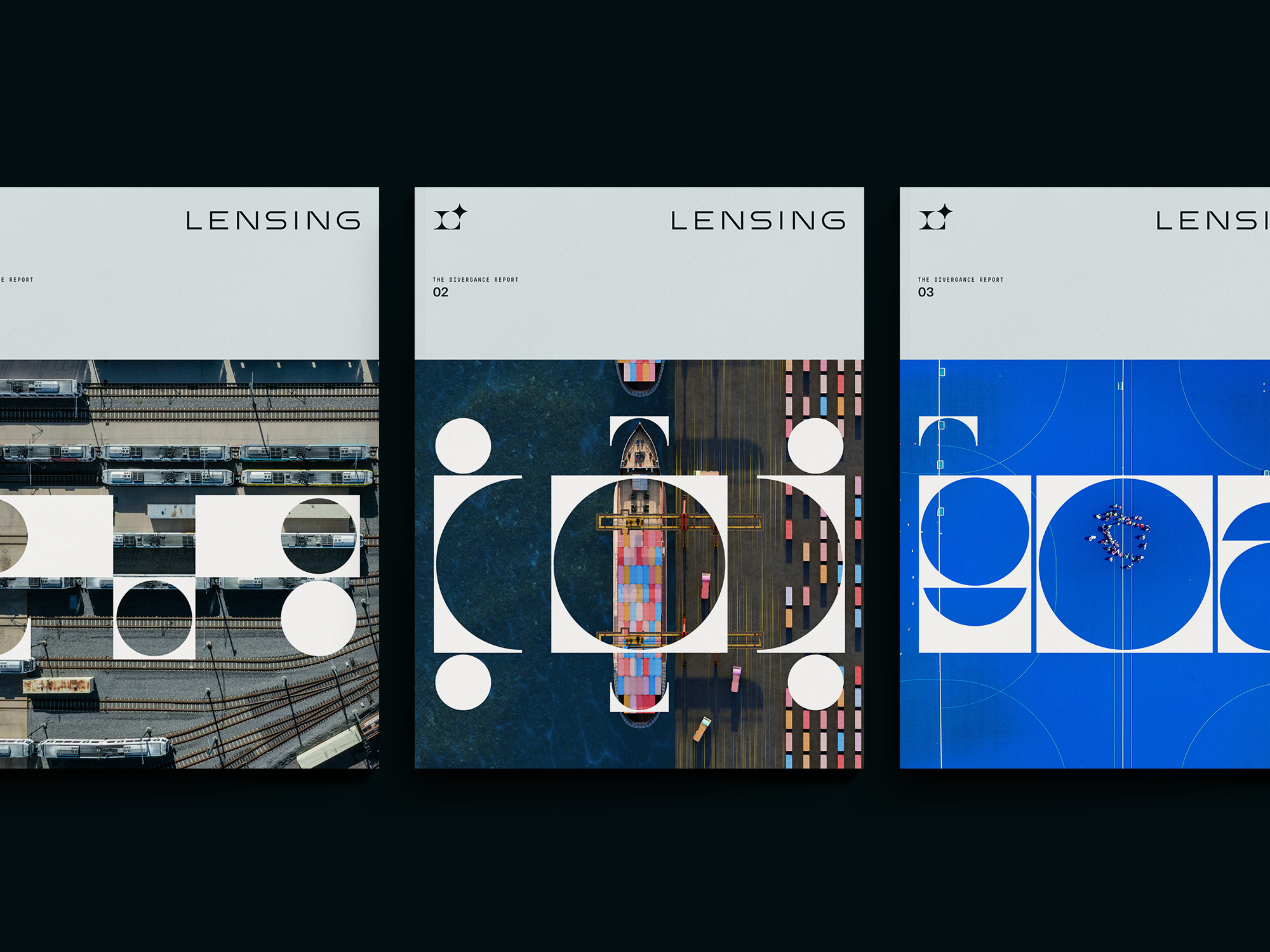
And what do we walk upon? Steel or stars, naturally, depending on your perspective.
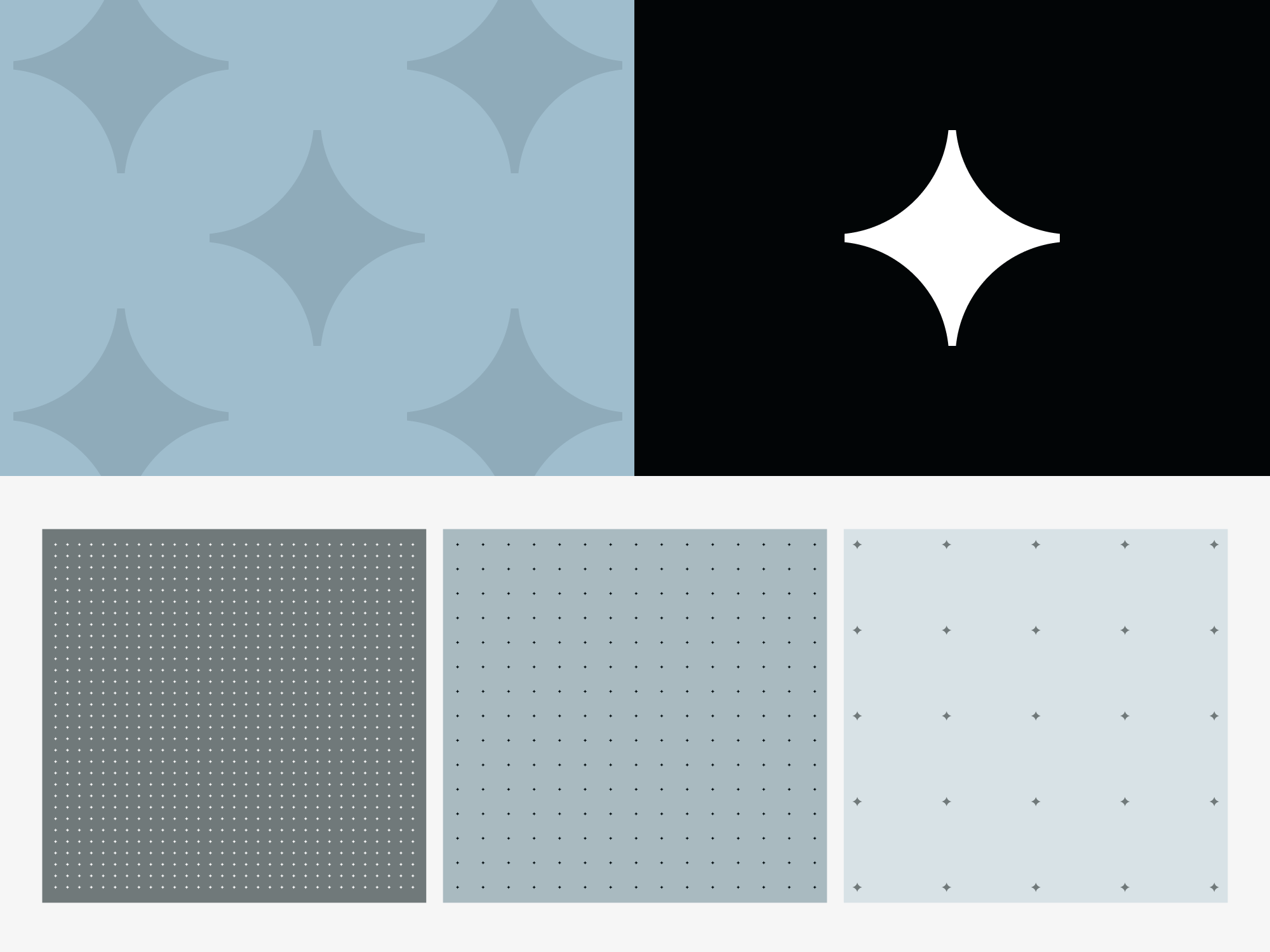
It’s a true expression of who we are, as Lensing, by way of who we serve, which is audacious businesses wrestling with internal complexities, making products that make the future happen.