
I’ve been in the tech space for 25 years now, first at SAP, then a variety of startups where I worked on sports, media, and robotics. It was a thrill to see LLMs break into the public consciousness in the way that they have. The adoption at JP Morgan was swift. But then, things seemed to stall.
There was a chasm between what prosumer-type AI code-gen apps were creating, and what enterprises actually needed. It’s tough to fathom the complexity of working within a 350,000-person organization until you have, but I couldn’t figure out, why couldn’t Lovable or Cursor et al. offer features for spec-driven development? Generate auditable documentation? In short, function within an enterprise?
That questioning led me to join Lensing, which I believe is the closest to answering this. It’s also inspired me to start writing this newsletter based on the conversations I’m having with Fortune 500 CXOs about what’s actually happening at the frontier.
What’s happening at that frontier? Many things, but a common one that bedevils every CIO I talk to is that AI-generated code is the least of their problems. Everyone can generate it. But few can QA it or ensure that it was designed around specifications that make it usable in the enterprise.
Coding is just one step in the software development lifecycle.
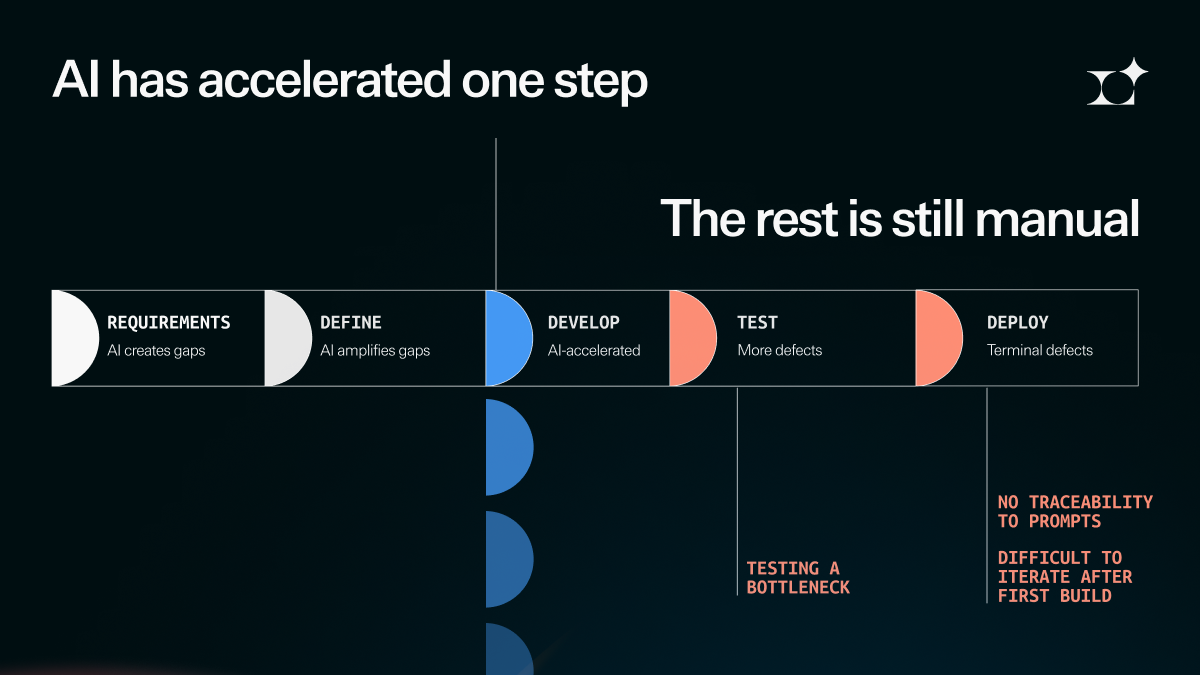
What all these CIOs are talking about is how to make AI operational within that workflow. Or how to reorganize, reskill, and reorient teams to be able to make effective use of it. Said one CIO, "We've seen faster development… [but ] we've also seen more defects going to the testing phase. I don't think we've put our finger on it just yet."
This is a many-sided problem and in the coming weeks, I’ll explore questions like, where are the agents that code other agents? Why are humans still in the loop at every layer? What is “context poisoning,” and what can be done about it?”
And, a favorite: How are companies redesigning their companies to incorporate AI? E.g. adopting fractionalized pods or shifting subject expert input left, earlier in the specification conversation.
I think you’ll find the newsletter useful, or at the very least, thought provoking, and throughout, I’d genuinely appreciate your feedback.